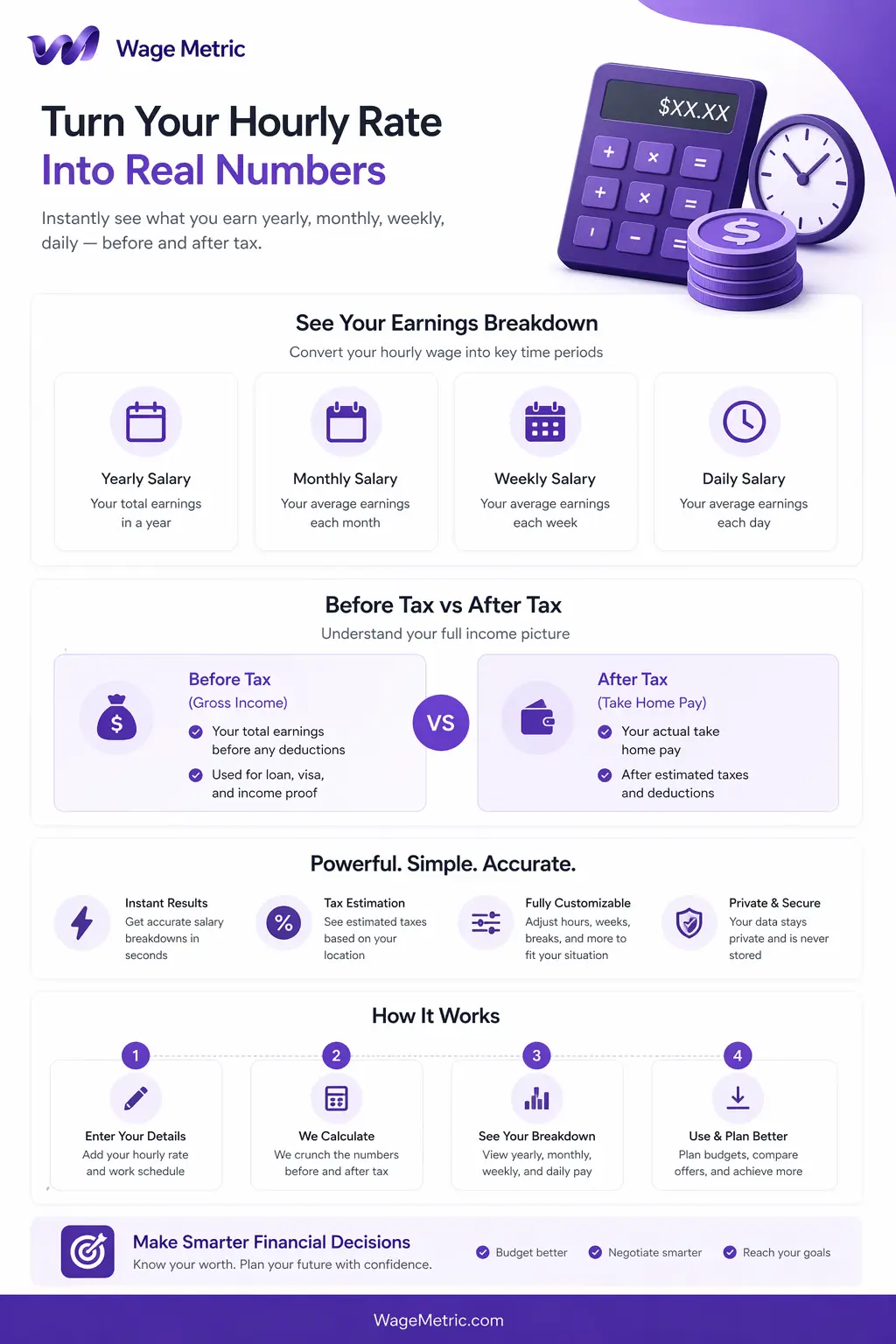
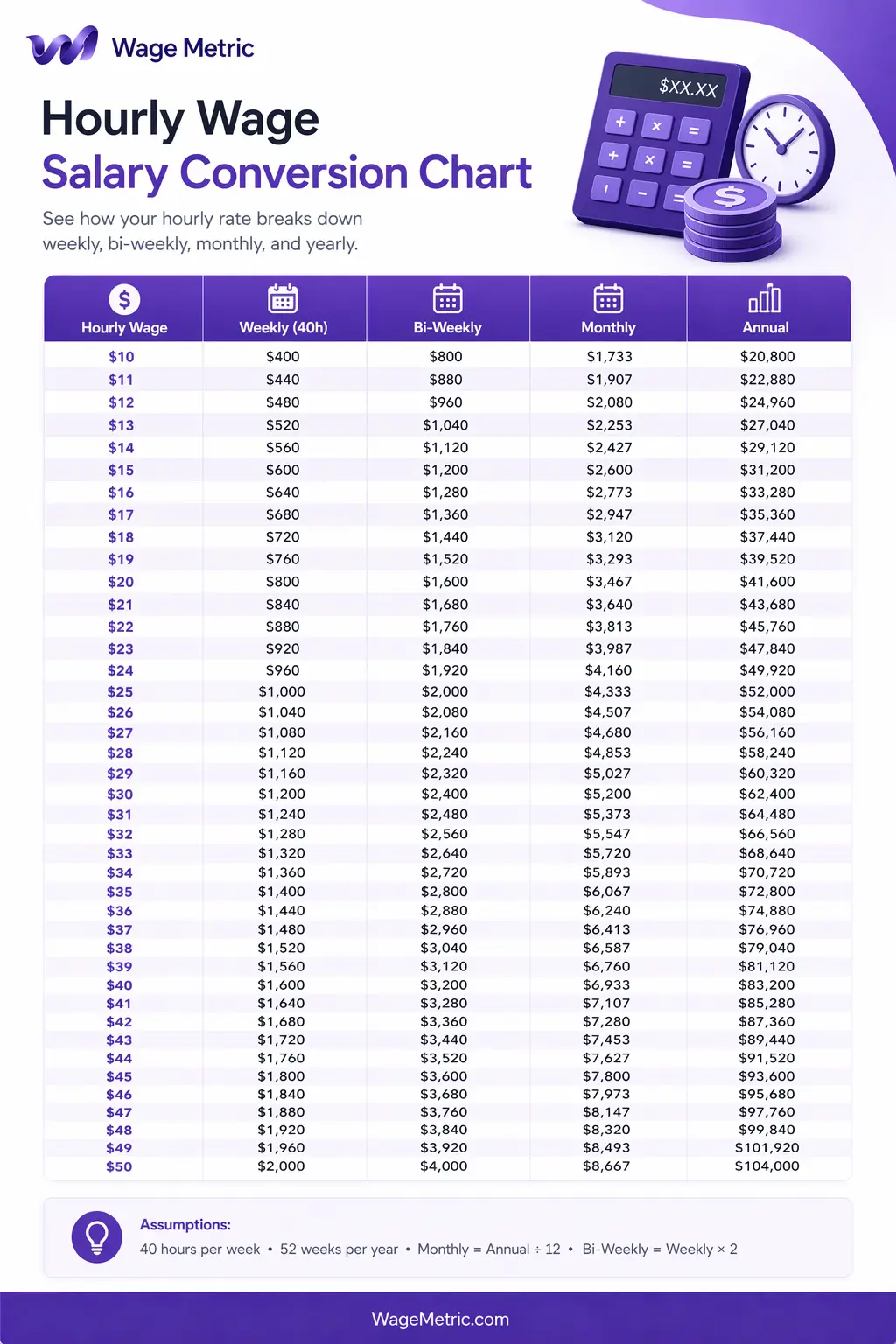
This hourly paycheck calculator turns your wage into numbers you can use: rent, bills, and savings live in monthly take-home, not in the headline annual figure. You see gross and estimated net together by hour, week, month, and year—free to use whether you typed convertor or converter.
Paycheck calculator hourly: same math, clearer picture
Two people at the same rate can take home different amounts after state tax, time off, or overtime. Change hours, weeks, and state here and the gap shows up right away—no spreadsheet required for a first pass.
Need a fast answer? Yearly and monthly are up top. Need something closer to real life? Adjust hours per week, weeks per year, and breaks, then read weekly and monthly net next to the annual total—including how biweekly or twice-a-month checks would split that money.
Hourly paychecks by state: gross vs take-home
The same wage can feel generous in one state and tight in another once taxes hit. Keep gross and estimated take-home side by side so you are not comparing offer letters to bank deposits.
Moving? Pick your state, then try the same rate in a few others and compare monthly net. That matters in Kansas, Nebraska, Oklahoma, Louisiana, Arkansas, Mississippi, Utah, Montana, Wyoming, New Mexico, Idaho, Iowa, Maine, Vermont, Rhode Island, New Hampshire, Alaska, Delaware, West Virginia, South Dakota, and North Dakota too—not only the big coastal metros. Try a higher and lower tax setting if you want a high/low band, not a single guess.
Big cities still cost more: Los Angeles, San Diego, Seattle, Chicago, and Philadelphia can eat the same paycheck faster than smaller towns—pair these numbers with your own rent and commute.
Overtime, unpaid breaks, and fewer weeks worked
Not everyone works a clean 40 × 52. Unpaid breaks, time off, slow seasons, and fewer weeks all pull gross down; overtime, tips, bonus, or commission push it up. Use the controls to match your schedule, including 401(k) deferrals if you use them. W-2 and 1099 are different in real life—this is a rough guide, not tax advice.
Small edits add up: one fewer paid week or a few overtime hours can move yearly totals by thousands. Set the schedule honestly before you size a lease or a car payment.
Monthly planning and money decisions
Start with monthly take-home, then rent or mortgage, utilities, insurance, transport, and debt. If fixed costs eat most of net pay, surprises get hard. Aim for a monthly picture where basics are covered and something is left for savings.
Try three versions: fewer hours or higher deductions (cautious), your usual pattern (middle), and steady overtime or lighter tax (upside). That beats betting everything on one number.
Salary negotiation
Start from yearly and monthly take-home for each offer, not just the hourly line. A slightly lower rate with steadier hours, better benefits, or lower tax after a move can still win on what you keep.
Working backward helps: pick the monthly net you need, then nudge rate and assumptions until the calculator hits it. That is easier to explain than “I want more because it feels low.”
Getting numbers you can trust
Use real hours—averaged over recent months if they bounce. Count unpaid breaks and planned time off. Update state and rate when anything changes. The more honest the inputs, the more useful the output.
This is for planning and comparison, not filing taxes or running payroll. For exact withholding, use your pay stub or a tax pro. If you track numbers elsewhere, you can still drop annual and monthly figures in here to compare years or offers—including USD pay while living in Canada (including Ontario), Mexico, or the UK.
This Hourly Paycheck Calculator is a quick way to tie your rate to rent, bills, and savings: before and after tax, schedule tweaks, and state changes in one place. If you landed here from a paycheck hourly calculator search, set the inputs once, then open a state page when you want more local detail.
$20 an hour is how much a year? Use this calculator to convert hourly wage into yearly, monthly, and weekly pay with before-tax and after-tax estimates by state—same idea when you need salary to hourly math for an annual offer.
For searches like "$30 an hour is how much a year," results depend on hours worked, weeks worked, and tax location. This homepage gives a fast answer first, then deeper state-by-state comparisons when you need them.